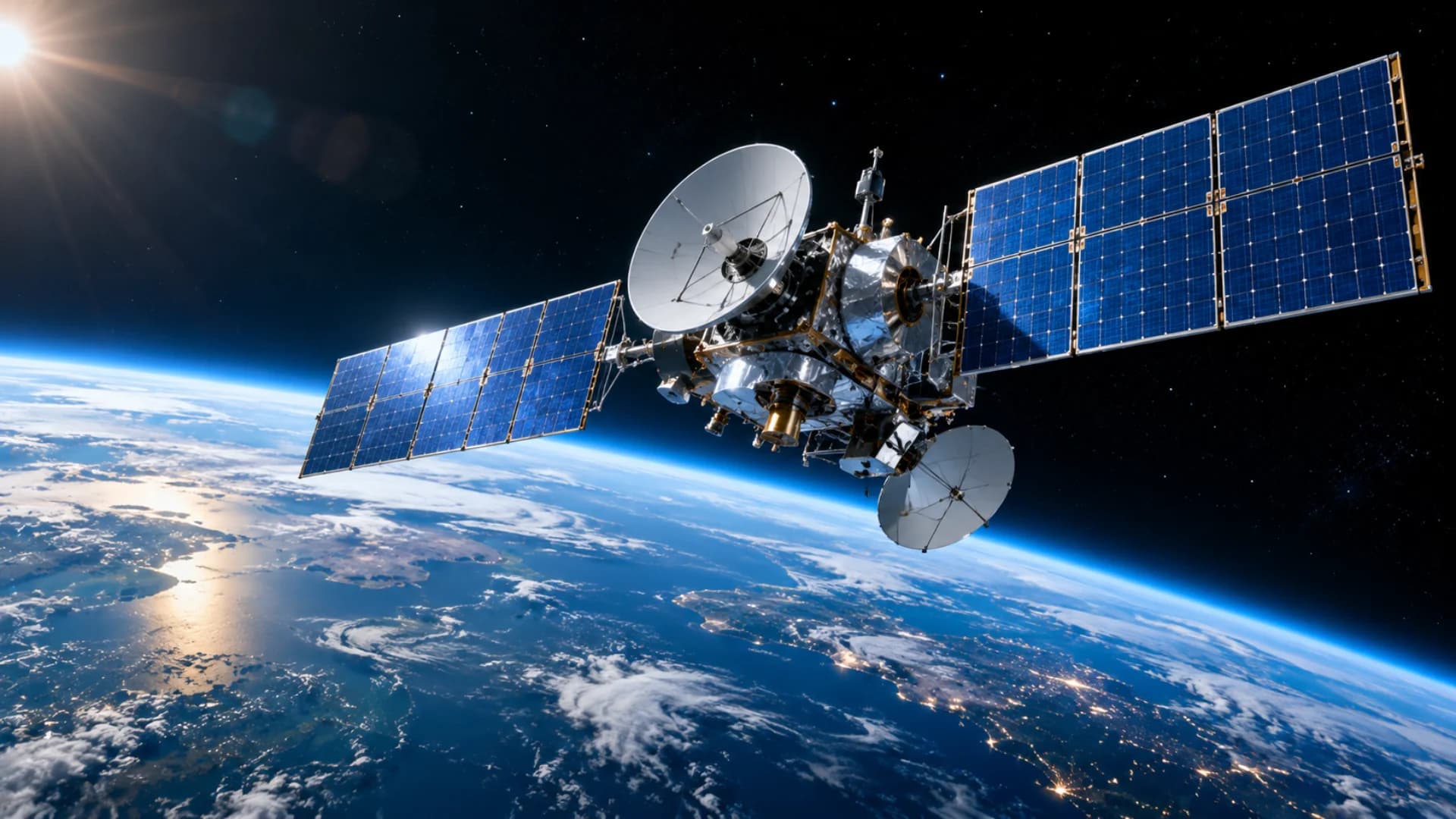
NASA is testing a new propulsion architecture that could change how future small spacecraft maneuver in orbit. Engineers have completed a series of environmental and physical tests on the ASCENT Dual Mode Propulsion CubeSat, a small spacecraft designed to demonstrate two different propulsion methods using a single common fuel tank.
The technology is being developed through NASA's Advanced Spacecraft Energetic Non-Toxic, or ASCENT, program. The spacecraft is approximately the size of a large shoebox and is designed to demonstrate how an integrated propulsion system can provide different types of thrust without requiring separate fuel systems.
One Fuel Tank, Two Propulsion Modes
Traditional spacecraft can use different propulsion systems for different mission requirements, but those systems can add mass, complexity and hardware. NASA's ASCENT demonstration takes a different approach by using one fuel tank to feed two types of engines.
The concept is designed to give a small spacecraft access to different propulsion characteristics from a common propellant supply. One propulsion mode can be used for relatively high-thrust maneuvers, while another can provide efficient thrust for longer-duration orbital operations.
Combining the systems around a shared fuel tank could simplify spacecraft architecture and potentially create more flexibility for future small satellite missions.
Why Small-Satellite Propulsion Is Difficult
Small spacecraft have strict limits on mass, volume and available power. Propulsion hardware competes for space with computers, communications equipment, sensors, batteries and scientific instruments.
Engineers therefore have to design propulsion systems that provide useful performance without consuming a disproportionate amount of the spacecraft's available resources.
NASA's ASCENT demonstration is aimed at this problem by integrating two propulsion approaches into a compact spacecraft architecture rather than treating each propulsion function as a completely separate subsystem.
Testing the Spacecraft Before Launch
NASA's Marshall Space Flight Center in Huntsville, Alabama, recently completed rigorous environmental and physical testing of the ASCENT flight hardware.
Environmental testing is an important step before a spacecraft can be considered ready for launch. Space hardware must survive the mechanical vibration, thermal conditions and other stresses associated with launch and operation in orbit.
The tests are intended to identify weaknesses while the spacecraft is still on the ground, reducing the risk of failures after deployment.
Using Less Toxic Propulsion Technology
The ASCENT program is also focused on non-toxic propellant technology. Conventional spacecraft propulsion can rely on highly hazardous propellants that require extensive handling precautions and specialized ground infrastructure.
NASA's work with ASCENT is intended to demonstrate alternatives that can improve safety during spacecraft processing while still providing useful propulsion performance.
Reducing the hazards associated with spacecraft propellants could become increasingly important as commercial satellite launches become more frequent and spacecraft production moves toward higher volumes.
What Dual-Mode Propulsion Could Enable
Different orbital maneuvers require different propulsion characteristics. A spacecraft may need relatively strong thrust for an orbital adjustment, while later mission phases may benefit from efficient low-thrust operation.
A dual-mode system can potentially address both requirements within a single integrated architecture.
For small satellites, this flexibility could be particularly valuable because designers have limited room for multiple propulsion systems and fuel tanks.
Potential Applications Beyond One CubeSat
The ASCENT demonstration is not simply about one small spacecraft. NASA is using the technology to investigate propulsion concepts that could eventually be incorporated into a broader range of missions.
Potential applications include small Earth-observation satellites, communications spacecraft, scientific CubeSats and other spacecraft that need orbital maneuvering capability without carrying large propulsion systems.
The technology could also become relevant to future spacecraft operating in more complex orbital environments where precise maneuvering and efficient propellant use are both important.
A Different Approach to Spacecraft Architecture
The significance of the ASCENT project is the integration of propulsion functions rather than simply developing a more powerful engine.
Spacecraft engineers increasingly have to optimize complete systems instead of individual components. A propulsion system that performs well but requires excessive mass, power or support hardware can reduce the overall capability of a small spacecraft.
By sharing a fuel supply between two propulsion modes, the ASCENT architecture explores whether a more compact system can provide a broader range of maneuvering capabilities.
Why This Matters for the Small-Satellite Industry
The small-satellite market has expanded rapidly as launch costs have fallen and commercial companies have developed smaller sensors, processors and communications systems.
However, propulsion remains one of the more difficult technologies to miniaturize. Small spacecraft need enough thrust to perform useful maneuvers, but the propulsion system cannot dominate the spacecraft's mass and volume budget.
Technologies that combine multiple propulsion functions could therefore help future spacecraft become more capable without requiring a proportional increase in size.
The Road From Ground Testing to Space
Successful ground testing does not by itself demonstrate that the propulsion system will perform as intended in orbit. The next stage is the actual flight demonstration, where engineers can evaluate the system under real space conditions.
In-orbit testing can reveal characteristics that are difficult to reproduce completely on Earth, including long-duration thermal behavior, propulsion-system interactions, spacecraft attitude control and performance in microgravity.
Data from the demonstration can help NASA determine how the architecture could be refined for future missions.
The Bigger Space Technology Trend
ASCENT reflects a wider shift toward making spacecraft smaller, more capable and more flexible. Instead of simply shrinking traditional spacecraft systems, engineers are redesigning individual subsystems around the constraints of small satellites.
Integrated propulsion is one example of this approach. Similar trends are emerging in spacecraft computing, communications, autonomous navigation and robotic servicing.
If the ASCENT concept performs successfully in space, the technology could provide another option for mission designers looking for compact propulsion systems with multiple operating modes.
What Comes Next
NASA's immediate objective is to demonstrate that the dual-mode propulsion architecture can operate as designed in space. The resulting performance data will be important for determining how useful the concept could be for future spacecraft.
The project illustrates an important direction in space engineering: future satellites may need to accomplish more with less hardware, less mass and fewer separate subsystems.
For small spacecraft, a propulsion system capable of providing different operating modes from a shared fuel architecture could become an important tool for improving maneuverability while keeping spacecraft designs compact.